
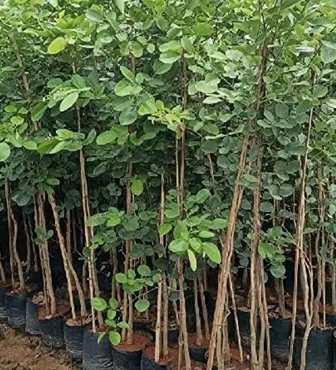
A truly blessed part of the natural environment, a variety of flora has been a segment of Indigenous culture and heritage for thousands of years, including primeval and time-worn trees that have stayed on our mother earth for about 400 million years. Amongst many aromatic and non-fragrant tall and short timbers of the world, there has been a mention of one nonaromatic tree called Red Sandalwood in the Holy Bible as well as in Indian literature, speaking of its relevance and presence dating back to the Ramayana and Mahabharata era. In Hindu culture, Red Sandalwood is considered an extremely pious wood and is often described as red gold.
Commonly known as Red Sanders in English, this tree belongs to the family Fabaceae found only in dry deciduous forests of the Deccan Plateau, mostly in the Eastern Ghats of Karnataka, Seshachalam hills of Andhra Pradesh, and in the northern part of Tamil Nadu. Red Sandalwood (Pterocarpus santalinus) is often confused with white sandalwood (Santalum album). While both contain immensely popular and rugged woods, they have stark differences when it comes to their therapeutic benefits and general usage.
Red Sandalwood is extensively used for making furniture besides also used in traditional medicines, for the treatment of diabetes, skin diseases, ulcers, eye diseases, snake and scorpion stings, and many holy rituals. The slow-growing Red Sandalwood has gorgeous red and fine-grained wood. It has been cultivated for centuries to get fabulous sturdy timber. Extremely rare and precious, it is used for intricate carvings, to make sturdy furniture, medicines, cosmetics, and religious rites. Since the tree extracts are considered one of the finest ingredients for skin, they occupy a key space in the skincare and beauty realm as well. The heartwood of this tree is known to have antihyperglycemic, antipyretic, anti-inflammatory, anthelmintic, tonic, haemorrhage, and potent aphrodisiac properties.
Botanically named Pterocarpus santalinus, Red Sandalwood has many vernacular names such as Redsanders, Rubywood, Saunderswood, Rubywood, Sandalwood Padauk, and Santal Rouge. Its other regional names include:
- Hindi: Lal Chandan, Ragat Chandan,Undum, Rathasanthanam
- Sanskrit: Raktsaara, Rakta chandana
- Tamil: Senjantanam
- Kannada: Rakthachandanam
- Malayalam: Rakthachandana
- Telugu: Kempugandha
- Marathi: Tambada Chandan
- Gujrati: Patanjali
Reviews
There are no reviews yet.